
Advice and News •
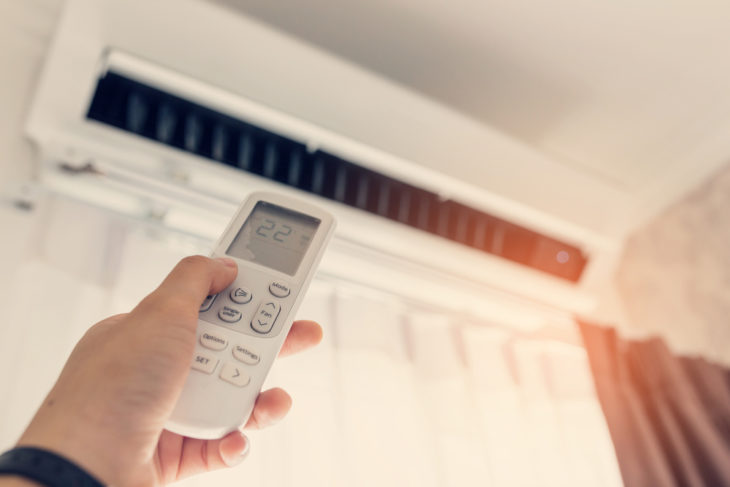
From chilly winter evenings to scorching summer days, your air conditioner is essential in keeping your home comfortable and ensuring restful sleep for every member of the family, including young children. The right temperature is crucial in fostering a calm environment, promoting restful sleep even during extreme seasonal changes.
This guide will help you identify the ideal temperature for your specific location and provide expert advice on fine-tuning your air conditioning to optimise comfort. Additionally, we’ll share effective tips for boosting energy efficiency year-round, allowing you to maintain a comfortable home without driving up your energy costs.
Best Aircon Temperature – What To Consider
Several factors should be taken into account when you’re choosing an air conditioner:
- Season: In summer, setting your air conditioner to a moderate level helps keep the space cool without overburdening the system. In winter, a slightly higher setting ensures comfort while minimising energy use. Your location can also affect the ideal temperature range (more on that below).
- Room Size: Larger rooms or those with higher ceilings may require a lower temperature to cool effectively. Smaller rooms can stay comfortable with a higher setting, which reduces strain on the unit.
- Humidity Levels: Humidity can significantly impact your comfort level at various temperatures. In humid conditions, you may feel warmer even at lower temperatures. Reducing humidity using your air conditioner’s dehumidifying mode can help you feel cooler without lowering the temperature excessively.
- Energy Efficiency: Opt for a temperature that strikes a balance between efficiency and comfort. Energy-saving settings, such as Eco Mode, can help reduce power consumption, and regular maintenance ensures the system operates at its peak efficiency.
What Temperature To Set Your Air Conditioner in Summer in Australia
The recommended range is 24-26°C, which strikes a balance between comfort and energy efficiency.
Energy-Saving Tips for Summer:
- Use Timers and Sleep Mode: Set your AC to turn off after a few hours to avoid wasting energy overnight.
- Ceiling Fans: Fans help circulate cool air, allowing you to set the temperature a few degrees higher without sacrificing comfort.
- Close Curtains and Blinds: Prevent the sun’s heat from entering and keep your room cooler.
- Regular AC Maintenance: Clean filters and ensure your system operates efficiently to conserve energy.
Find out more about air conditioning settings in summer here.
What Temperature to Set Your Air Conditioner in Winter in Australia
Many modern air conditioning systems come with heating capabilities that are perfect for winter. Using your AC can be a more energy-efficient option than traditional electric heaters. The recommended range is 18-20°C, which is ideal for comfort and is the best AC temperature for energy saving in winter.
Energy-Saving Tips for Winter:
- Use Layers: Layer your clothing and bedding to stay warm and reduce the need to increase the room temperature.
- Seal Windows: Prevent heat from escaping and cold air from entering by sealing any gaps around windows and doors.
- Use Eco-Mode: Modern air conditioners feature energy-saving modes that help reduce electricity consumption while maintaining a comfortable temperature.
- Turn Off AC in Unused Rooms: If you’re not using a particular room, close its vents and doors to prevent wasting energy on heating unused spaces.
Find out more about air conditioning settings in winter here.
Ideal Air Conditioner Temperature for Electric Savings By Location
Each Australian state has unique weather conditions, like humidity, rainfall, and wind, which can impact a unit’s performance. Warmer climates may require lower cooling settings, while cooler areas may need slightly higher heating levels. Factors like humidity and wind can also impact AC efficiency. Here’s a comprehensive guide:
Location | Cooling temperature (summer) | Heating temperature (winter) | Factors |
North Queensland, North WA & Northern Territory | 21 to 23°C | 17°C | These regions have a tropical climate and the high humidity of Northern Australia, in particular, can promote mould growth. Therefore, it’s important to use your unit frequency to regulate the internal humidity. In winter, humidity can still be an issue, so frequent use is also recommended during the cooler seasons. |
Central Australia | 21 to 23°C | 17°C | This region has an arid climate and can have extremes of temperature. Summers are particularly harsh with a lot of atmospheric dust. Therefore, filters should be regularly cleaned for efficiency. Winters can produce cold, dry conditions, so a temperature of 17° will ensure your unit runs as efficiently as possible. |
South-East Queensland & North-East NSW | 25°C | 18°C | This region has a sub-tropical climate. If you set your unit’s temperature in summer to 25°, you can cut your energy consumption by more than 20%! In winter, most homes in this region will be around 18° in the mornings and evenings with temperatures only spiking during the day. Setting it to this temperature means your unit won’t have to work as hard. |
South Australia | 24 to 25°C | 19 to 20°C | This region has a Mediterranean climate and offers little humidity and quite mild conditions during summer and winter. This means that most units can comfortably maintain these recommended temperatures. |
Tasmania | 28°C | 21°C | This region has a mild temperate climate. In summer, although the optimal unit temperature is 28°, it’s important to work with the prevailing conditions which can be variable in a Tasmanian summer. If temperatures drop significantly, you should adopt winter settings. In winter, conditions can vary significantly between the interior and the coast, so discretion is advised if you’re living in sub-zero temperatures. |
South-West WA | 23 to 24°C | 18°C | This region has a Mediterranean climate. In summer, settings should be changed according to weather conditions, particularly if a cold snap occurs — which can happen often! |
South-East NSW, North-East Victoria & ACT | 26 to 27°C | 20°C | This region has an oceanic climate. Being inland, they are subject to sudden cold snaps — even in summer. If this occurs, follow the temperature guidelines for winter. Winters are generally stable, so 20°C is the ideal temperature. |
Southern Victoria | 24°C | 20°C | This region has a moderate oceanic climate. 24°C is ideal in standard summer conditions as well as in seasonal heat waves. Therefore, although it might be tempting to adjust it downwards after they pass, it may compromise your unit’s efficiency. Winter conditions are generally stable, so adjustment will rarely be necessary. |
Ideal Room Temperature for Sleeping
Sleep and body temperature play a crucial role in regulating our wake-sleep cycle. Our core body temperature fluctuates throughout the day, but at night, it naturally decreases to a lower level, signalling the body to wind down for sleep.
However, temperatures that are too hot or too cold at night can disrupt sleep. During REM sleep, the brain’s temperature-regulating system shuts down, so maintaining a comfortable room temperature is essential to avoid uncomfortable sleep patterns.
Experts suggest that cooler temperatures help by aiding the body’s core temperature drop, with the best air conditioner temperature for sleeping around 18°C. The sleep mode feature on air conditioners can support this by adjusting the room temperature so that it’s in sync with your natural sleep cycle. Once it’s set, the unit will reach the desired temperature and gradually lower power to maintain it efficiently.
If your air conditioner includes an intelligent movement sensor, it will adjust the temperature based on movement in the room, such as tossing and turning. If sleep is disturbed, it restores the ideal temperature, gradually increasing it before shutting off when you return to restful sleep.
Using the right air conditioning temperature and features can significantly improve your sleep quality.
The Best Air Conditioning Temperature for a Sleeping Baby
According to the Red Nose organisation, there is no “perfect” temperature for babies, as it depends on several factors, such as the season and how your baby is dressed. However, a general guideline is to dress your baby similarly to how you would dress yourself for the temperature, ensuring they are comfortably warm but not too hot. Overheating is a serious risk, as it can increase the likelihood of sudden infant death syndrome (SIDS), so it’s crucial to avoid overdressing your baby.
Additionally, room temperature should be carefully monitored, ideally between 18°C and 22°C. If you’re using an air conditioner, ensure it’s not blowing directly on your baby, as this can cause discomfort. It’s essential to maintain a balanced and stable temperature — a room thermometer can help or check your baby’s back or neck to ensure they’re not too cold or hot. Also, avoid using heavy blankets as they can contribute to overheating.
Ideal AC Temperature Tips to Save Electricity
According to the Australian Government, and depending on your climate zone, heating and cooling can account for 20% to 50% of energy used in Australian homes. You can maximise energy savings and reduce cooling and heating loads by doing a few simple things:
- Set the right temperature for your region and the season.
- Use programmable thermostats to set the temperature and avoid unnecessary energy use when you’re asleep or away from home.
- Choose an air conditioner with inverter technology, which adjusts the compressor speed to meet the room’s cooling or heating demand, using less energy than conventional AC systems.
- Maintain your AC regularly including changing filters, and having it serviced annually.
- Seal any gaps where outdoor air can enter, such as around doors and windows, using weatherstrips.
- In summer, keep blinds drawn and curtains closed to keep as much heat outdoors as possible.
- Use ceiling fans to circulate air once it’s been cooled.
- Install exterior shading or plant deciduous trees to manage the amount of sun entering the home.
- Install roof, wall and floor insulation.
- Bigger changes, such as installing double glazing or replacing your heating and cooling appliances with more efficient models, can also reduce heating and cooling loads.
Tips For Buying An Energy-Efficient Air Conditioner
- When buying a new air conditioner, prioritise energy efficiency to reduce long-term costs. Look for units with a high SEER (Seasonal Energy Efficiency Ratio) rating, typically above 14, which indicates better energy use.
- Opt for an Energy Star-certified model for guaranteed efficiency. The Energy Rating Label displays the energy efficiency and energy consumption of appliances, enabling you to compare running costs over the appliance’s lifespan. This includes air conditioners that display a Zoned Energy Rating Label. Appliances must meet specified criteria before they can receive a label.
- Labels must be displayed on appliances that are physically sold in a store, except for those sold online or through other channels.
- To support your shopping experience, you can use the Energy Rating Calculator to compare the star rating and running costs of your preferred appliances saving you money and energy.
- Consider the size of the unit – if it’s too large or too small, it can waste energy. Here’s a good guide.
- Choose a variable-speed compressor for more precise temperature control and reduced energy consumption.
- Ensure the unit has Smart features, like programmable thermostats or Wi-Fi connectivity, for added control.
- Finally, have it professionally installed and regularly maintained for optimal performance.
Finding the most efficient temperature for air conditioning not only enhances comfort but also helps reduce energy consumption, lower utility bills, and minimise environmental impact.
References
- Chris Barnes (April 2024), Air conditioner energy usage and running costs, Choice article, accessed 16 July 2025
- Daikin (2018), Top 5 tips to reduce your air conditioning bill this summer, Daikin article, accessed 16 July 2025